TechNote: Sample Preparation for Proteomics Applications with PIXUL
The VIB Proteomics Core ran PIXUL head-to-head against a VCX130 probe sonicator and found equivalent results across every bottom-up LC-MS/MS QC parameter — while moving sample prep from one tube at a time to 96 wells in parallel.
Twelve-page technical note in which the VIB Proteomics Core (Ghent, Belgium) tested PIXUL against a standard VCX130 probe sonicator on two biologically distinct sample types: HEK293T cultured cells (5.4M cells per sample, 3 replicates per arm) and fresh mouse liver tissue (100 mg per sample, 4 time points). Both arms used identical 5% SDS / 50 mM TEAB lysis buffer, Protifi S-Trap digestion with 1 µg trypsin, and nanoLC-MS/MS on a Thermo LTQ Orbitrap Elite, searched with MaxQuant 1.6.17.0 against Swiss-Prot at 1% FDR. Four QC parameters were scored for each sample type — BCA protein extraction, peptide and protein-group identification, missed trypsin cleavages, and post-translational modifications (N-terminal acetylation and methionine oxidation).
Read or download to see:
- Head-to-head LC-MS/MS equivalence on HEK293T cells — PIXUL identified 9,080–10,020 peptides and 2,268–2,431 protein groups against the probe sonicator's 9,559–9,619 peptides and 2,381–2,480 protein groups, with total missed-cleavage rates of 33.79% vs 33.35% and indistinguishable N-terminal acetylation (2.70% vs 2.47%) and methionine oxidation (11.72% vs 11.09%) across three replicates per arm.
- 5 minutes of PIXUL sonication is sufficient for complete mouse liver lysis — protein yield, peptide IDs, missed-cleavage rates, and modification profiles were indistinguishable across 5, 15, 30, and 60 minute time courses on 100 mg fresh tissue inputs, after identical MACS pre-disruption.
- Statistically significant tissue protein yield over probe sonication — BCA extraction was higher for PIXUL at every time point tested (p = 0.00048 at 5 min, p = 0.00552 at 15 min, p = 0.014 at 30 min, p = 0.022 at 60 min), with no artifactual oxidation or acetylation introduced by the 2 MHz megasonic process.
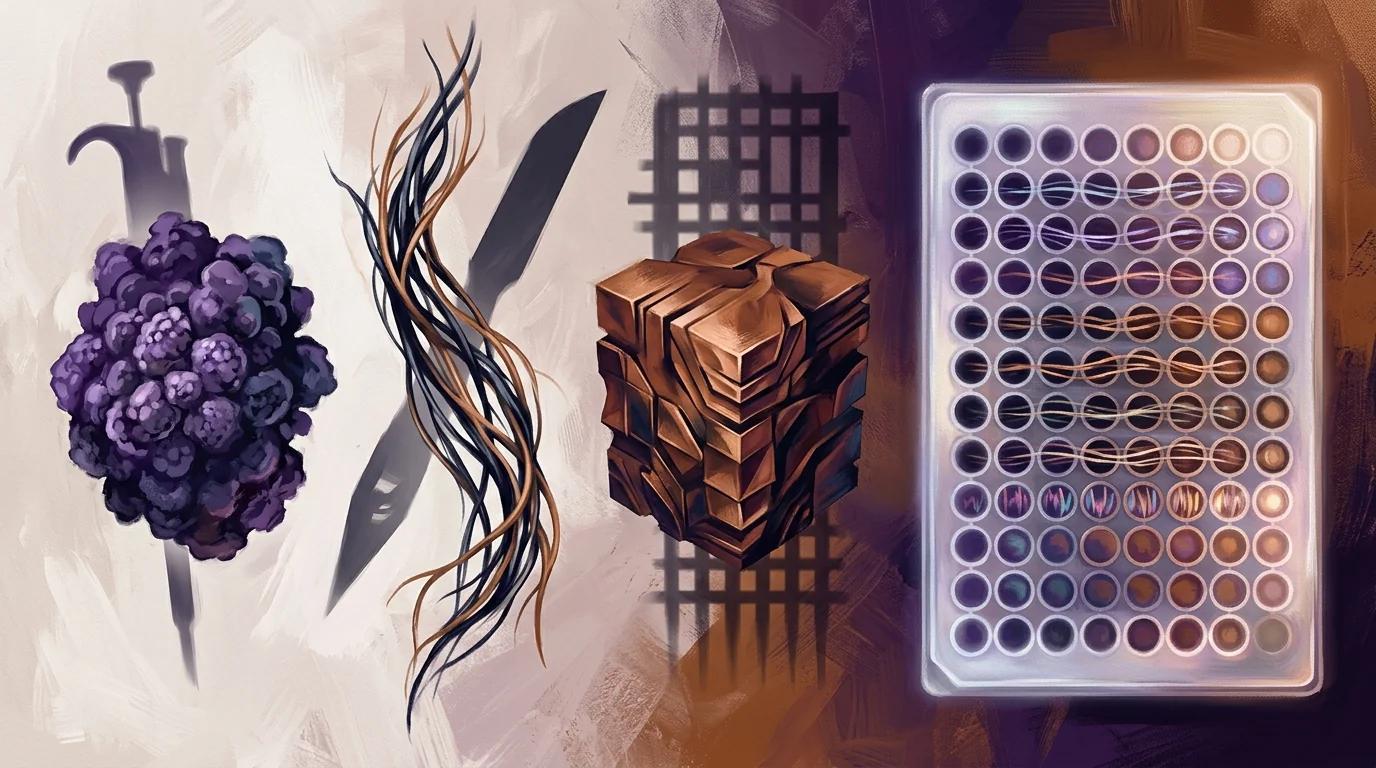
- 96 samples in parallel with up to 12 sonication conditions per run — standard 96-well microplate format on the same S-Trap workflow used in the probe-sonicator arm, replacing serial 3 × 15 s probe pulses with a single plate-based run (PIXUL parameters: 50 pulses, 1 kHz pulse frequency, 20 Hz burst rate).