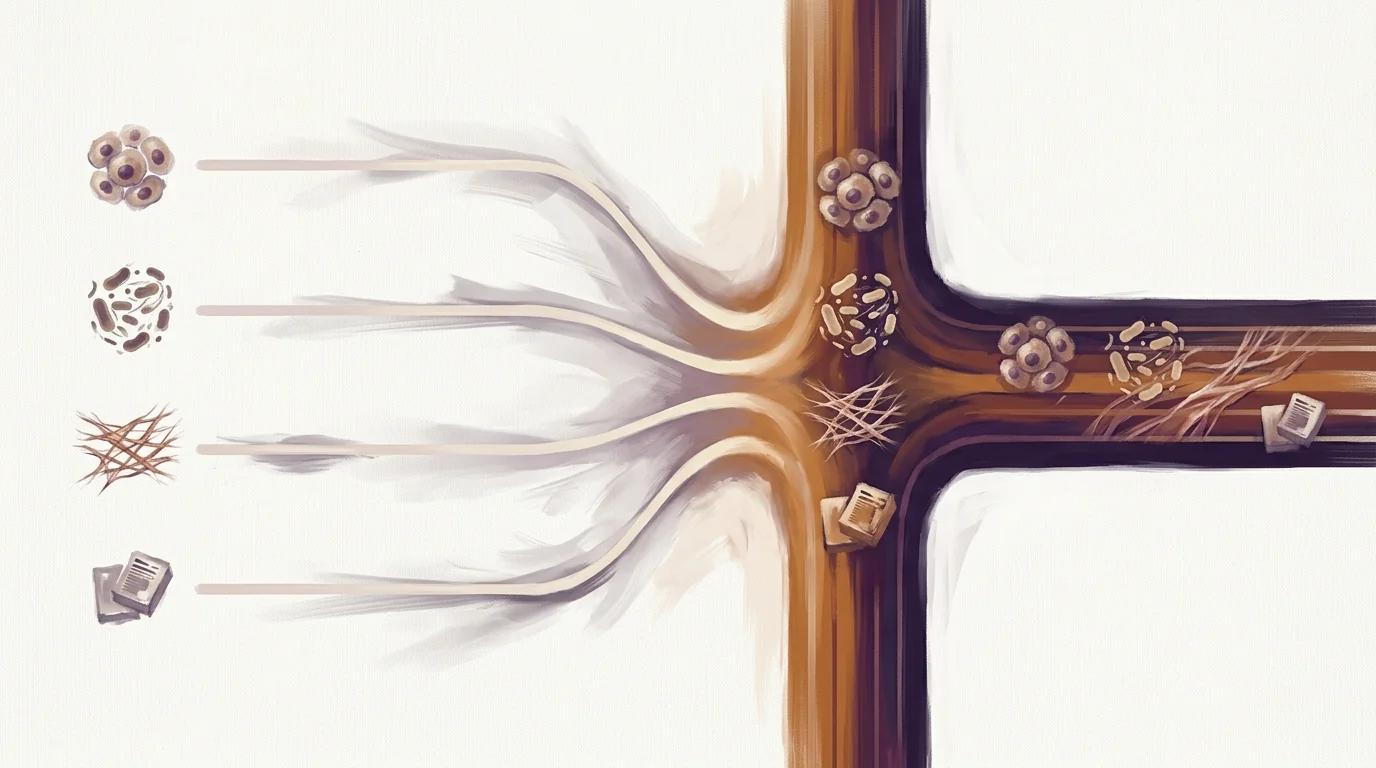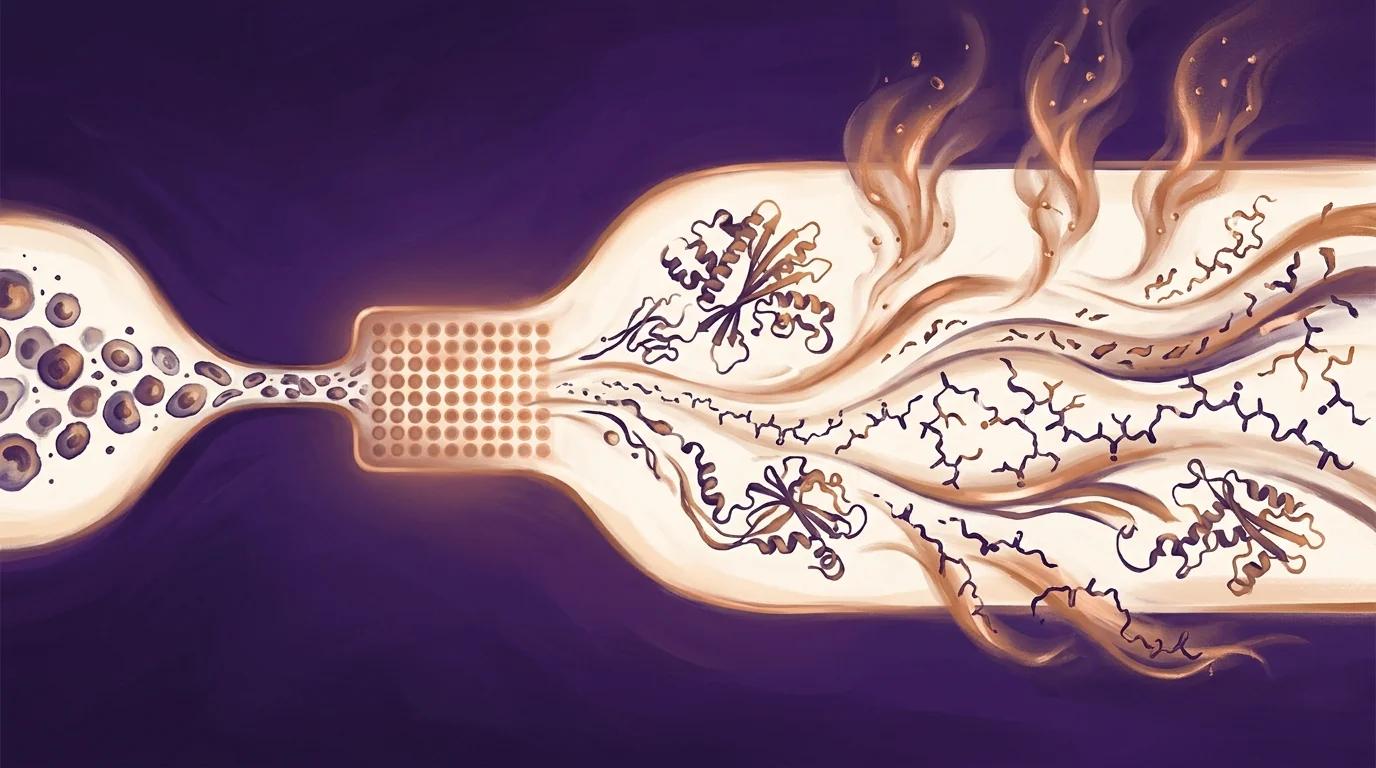
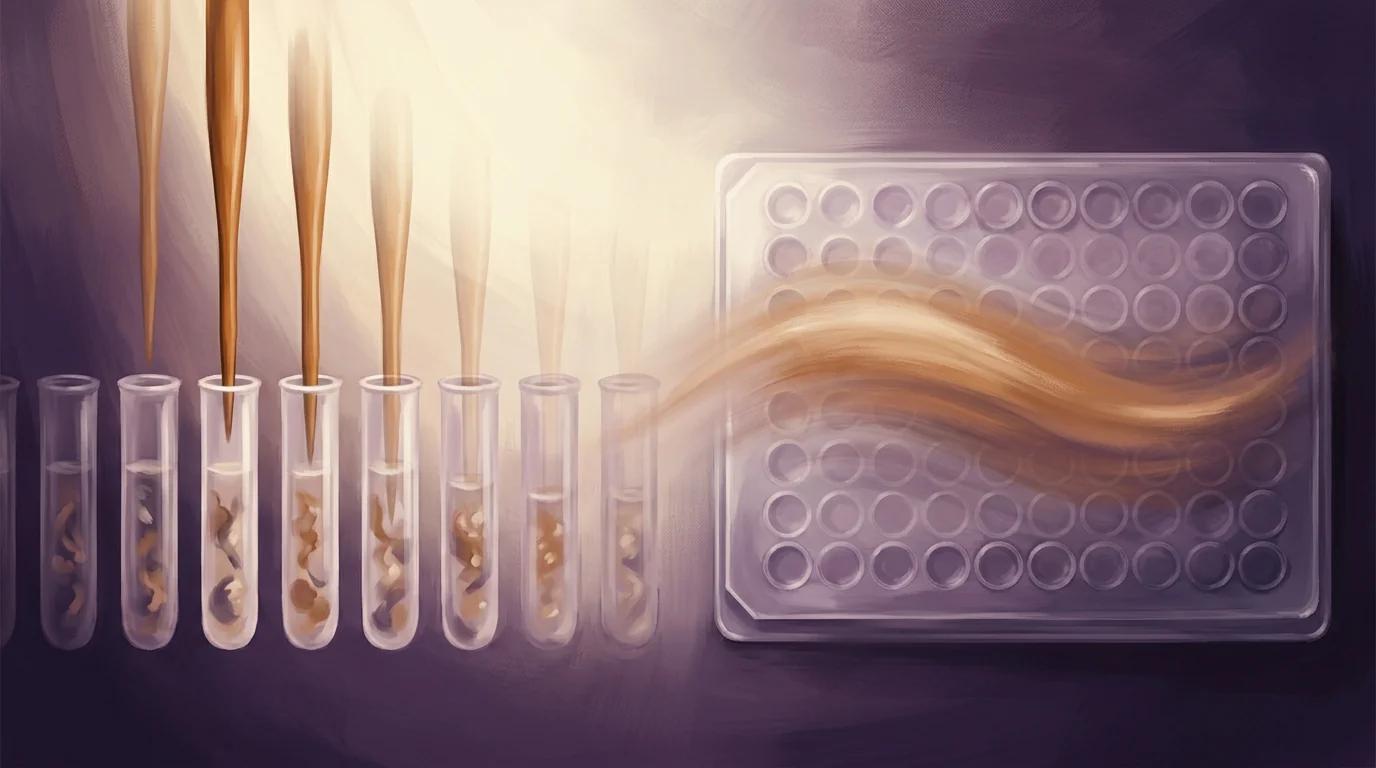
- Probe sonication and a high-throughput sonicator disrupt cells the same way — acoustic energy — so the protein you recover is comparable; what differs is everything around the disruption.
- A probe runs one sample at a time and depends on the operator, so across a plate it gets slow and variable — the two things a shared core can least afford.
- A plate-based sonicator keeps the disruption identical across 96 wells and out of the operator's hands — same protein yield, documented in the peer-reviewed literature against a probe, with no tip to clean between samples.
Both methods disrupt cells the same way — they part ways at scale
Start with what they share, because it's the honest part. Probe sonication and a high-throughput multi-sample sonicator rely on the same physics: acoustic cavitation breaking cells open. A probe delivers it through a tip lowered into one sample; a plate-based instrument delivers it across a 96-well plate. The disruption itself is equivalent — which is why this isn't a story about one method extracting "better" protein than the other.
Where they diverge is everything that happens when you have more than one sample. A probe is a single-sample tool used many times in a row; that's where the strain shows up.
One at a time, by hand, is where probe sonication strains
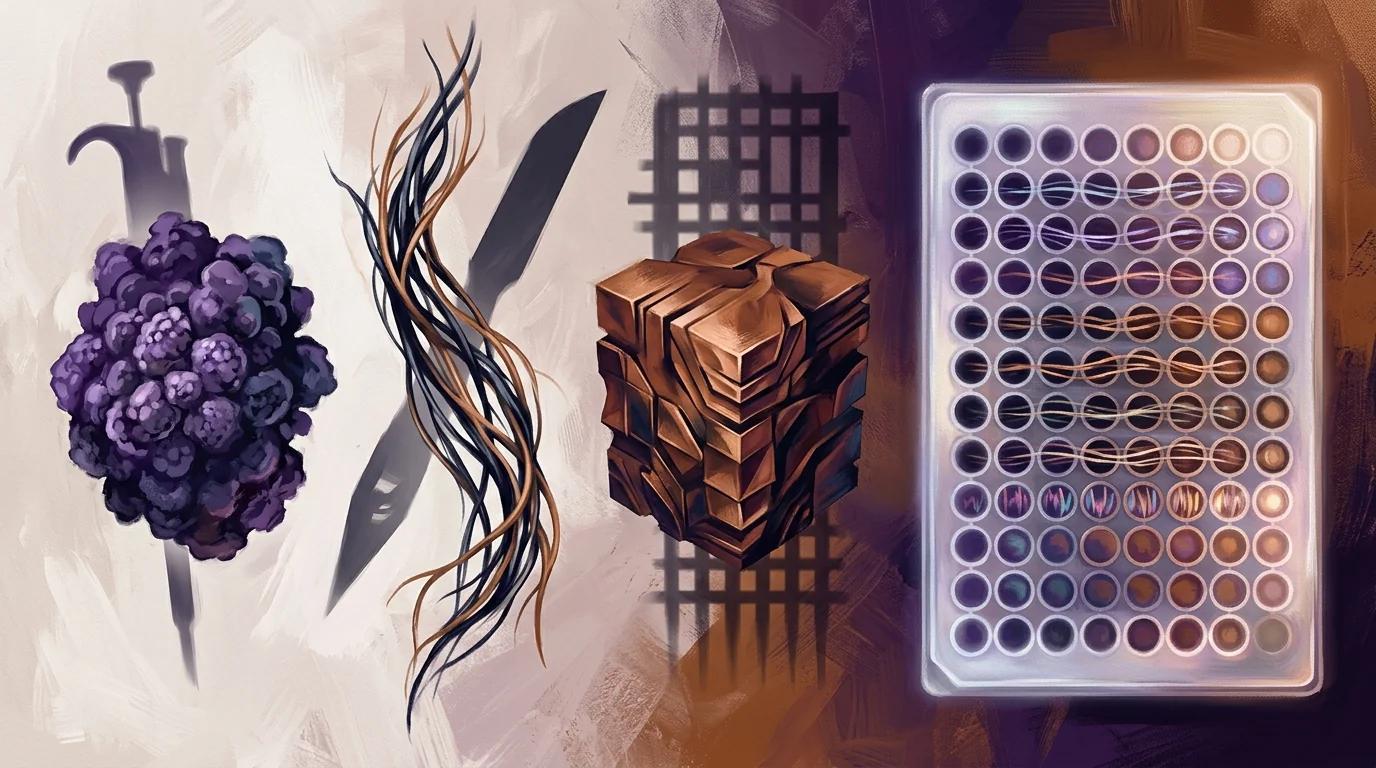
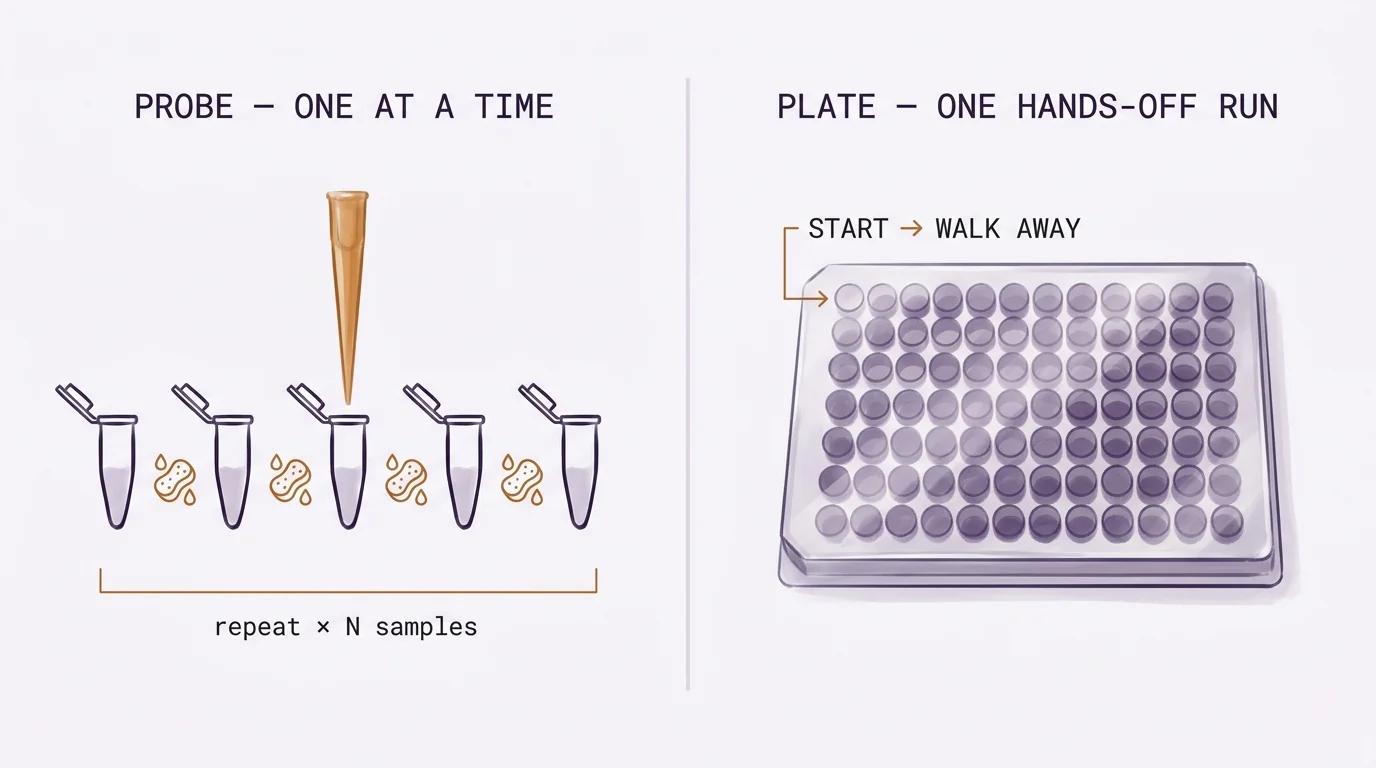
Run a plate's worth of samples through a probe and three costs stack up: the time (one sample at a time, an operator resetting between each), the variability (energy and placement differ by hand and by sample), and the carryover (the tip has to be cleaned between samples to avoid cross-contamination). None of these is a flaw in the physics — they're the cost of doing a parallel job with a serial tool.
PIXUL was built to remove that cost: it disrupts a full 96-well plate in one hands-off run, with sealed wells and no shared probe. The energy is set per column and delivered the same way to every well, so the result is uniform across the plate; nothing is lowered into the samples, so there's no tip to clean and no carryover between them.
| Dimension | Probe sonication | High-throughput multi-sample sonicator (PIXUL) |
|---|---|---|
| Format | one sample at a time, serial | full 96-well plate, one hands-off run |
| Operator involvement | present for every sample, resets between each | load the plate and walk away |
| Consistency across many samples | depends on operator and tip placement | uniform across all 96 wells, documented |
| Cross-contamination | tip cleaned between samples (carryover risk) | sealed wells, no shared probe |
| Protein yield / peptide IDs | the established baseline | comparable — documented in the peer-reviewed proteomics literature |
| Operator exposure | noise and aerosols, repetitive handling | closed, hands-off |
| Best fit | a single sample or a few | many samples, where consistency and throughput matter |
For one sample or a few, a probe is still the right tool
None of this makes a probe the wrong instrument. For a single sample, or a handful, a probe is fast, flexible, and proven — there's no plate to set up and nothing to gain from parallelizing three tubes. It's the legacy standard because it works.
Going from a probe to a plate changes the throughput and the consistency — not the protein you get.
The case for a plate-based sonicator isn't that the probe disrupts poorly. It's that a probe is a single-sample tool, and a shared core rarely has a single sample — so the moment a run is a plate, serial time, hand-to-hand variability, and tip cleaning turn into the bottleneck (see what that does to throughput and to consistency).
Do you lose yield going from a probe to a plate?
Does moving off a probe cost you protein?
No — that's the part that doesn't change. Protein yield and peptide identifications from the plate-based run are comparable to probe sonication, documented in the peer-reviewed proteomics literature rather than asserted. You're not trading yield for throughput; you're keeping the disruption a probe gives you and dropping the serial time, the variability, and the carryover that come with doing it one tube at a time.
Match the method to your sample count, not habit
The probe is often still on the bench out of habit, not fit. So make it a deliberate choice: for one sample or a few, reach for the probe; for a plate, where consistency and hands-off time decide how much the core can take on, the serial tool is the one holding you back (the full evaluation framework walks through the five criteria a spec sheet misses).