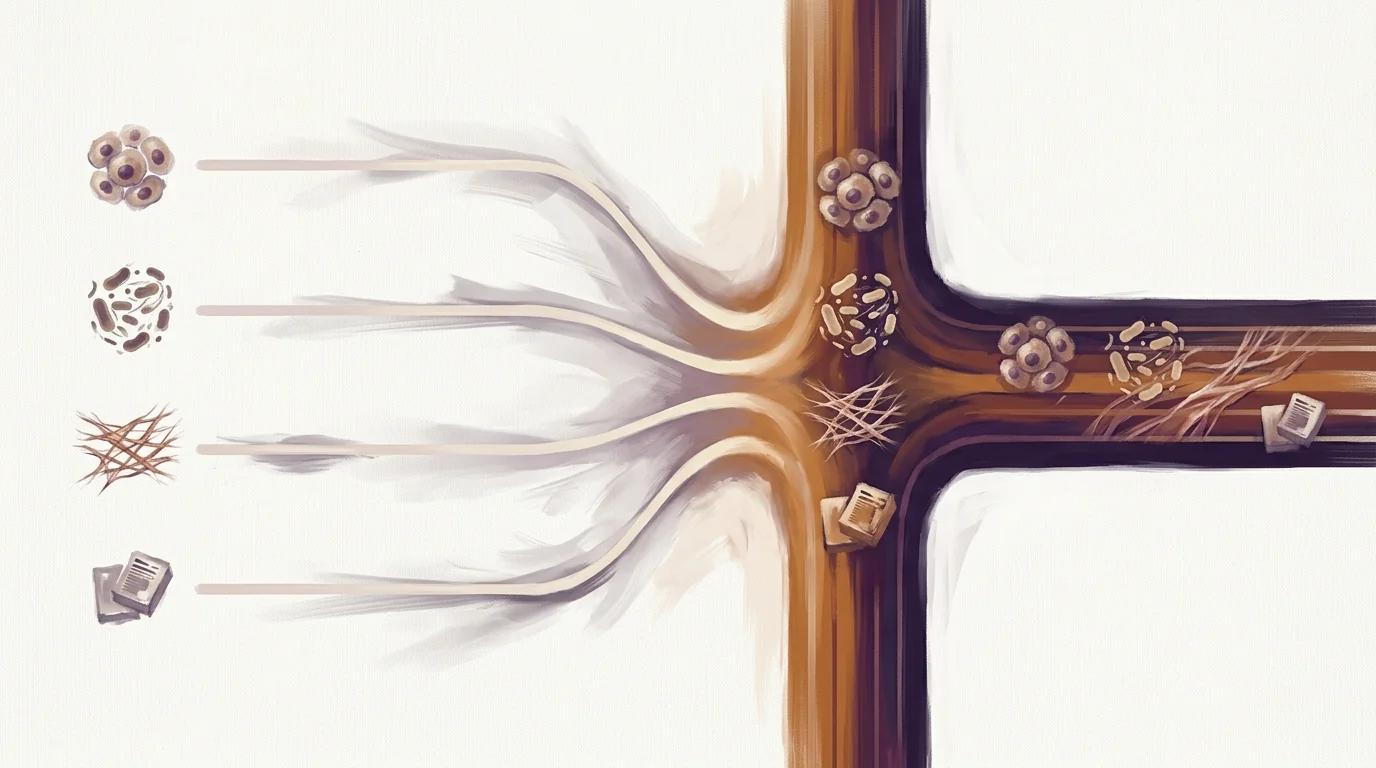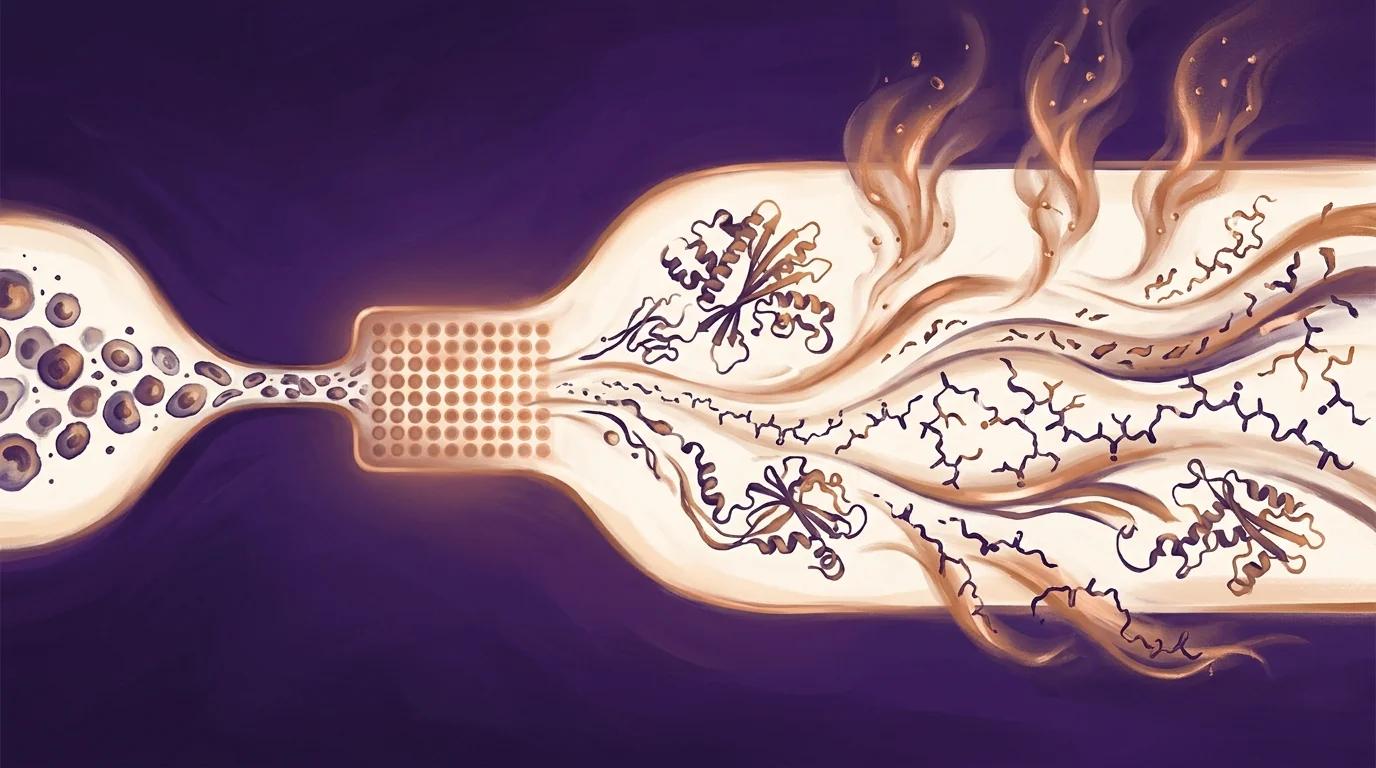

- In quantitative proteomics, variance introduced at sample prep is indistinguishable from biological signal — an inconsistent disruption step shows up as a batch effect in the final data.
- A method only holds if the front end is reproducible well to well and run to run; otherwise every comparison carries prep noise the analysis can't remove.
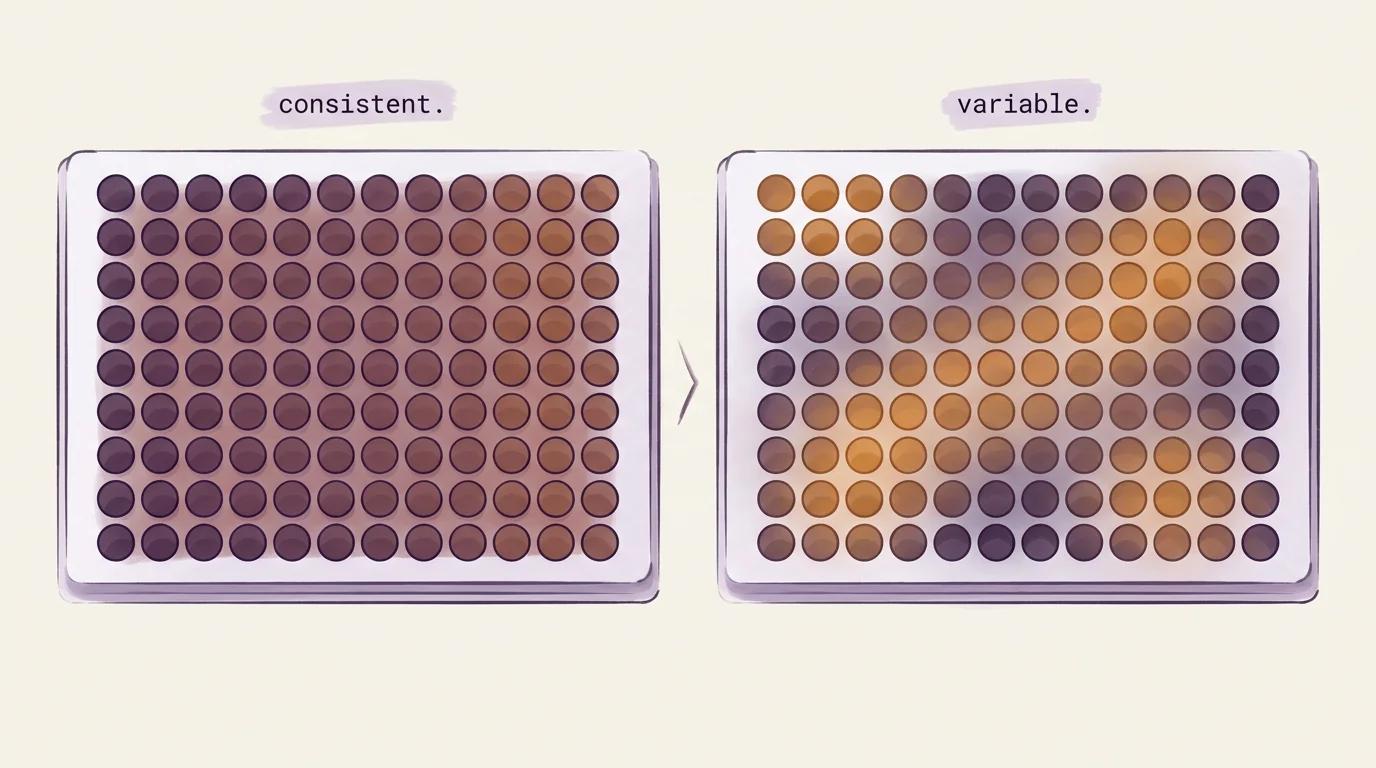
- Plate-wide, run-to-run consistency is what lets a core validate a method once and reuse it — the same result in well 1 and well 96, documented rather than assumed.
Variance at sample prep doesn't stay at sample prep
Quantitative proteomics is a comparison: this condition against that one, this timepoint against the next, abundances measured and weighed across a cohort. Anything that shifts those abundances for a technical reason — not a biological one — lands in the result looking exactly like a finding.
The disruption step is where that risk is highest, because it's the most sample-dependent thing the core does. If well 1 lyses a little harder than well 96, or today's run extracts a little more than last week's, that difference propagates downstream and settles into the data as a batch effect. The biology you're trying to measure now competes with noise the prep introduced.
Variance introduced at the disruption step doesn't announce itself — it arrives in the data looking exactly like biology.
A method only holds if the front end is reproducible
This is why consistency, not peak yield, is the property a shared core should hold its front end to. A core's whole model is to validate a method once and run it for everyone — and that only works if the front end gives the same result every well, every run.
PIXUL was designed for that uniformity: the same disruption delivered across all 96 wells of a plate, reproducibly, run after run. Two transducers drive each column and energy and time are set per column, so the plate isn't a gradient of slightly different treatments — it's 96 wells handled the same way. And it isn't an in-house impression: reproducibility across a full plate has been documented in the peer-reviewed literature, which is the standard of evidence a method should rest on (the full evaluation framework lives in the pillar).
Consistency is what makes a cohort's data comparable
The payoff is that the numbers mean what they say. When the front end is reproducible, a difference between two samples is a difference in the samples — not an artifact of how each was lysed. The core can compare across a plate, across plates, and across the weeks a study actually takes, and trust that the comparison holds.
That's also what makes the data defensible when it leaves the core. A reviewer asking “could this be a prep artifact?” gets a real answer: the front end is consistent, and it's documented (more on how that compares with one-at-a-time probe variability, and more on mixed-sample plate consistency).
Can't you just normalize the variance out?
If the prep adds variance, can't normalization remove it later?
Only partly — and not the part that matters. Normalization corrects for variance it can model (loading, total signal), but technical variance that's confounded with the biology can't be cleanly separated from it after the fact: once prep noise and real signal are entangled in the same numbers, no amount of downstream correction fully untangles them. The reliable fix is to not introduce the variance upstream, at the step where it's born.
Build your method on a front end you've measured, not assumed
Before a core commits a method to a front-end instrument, the question worth answering isn't “how much protein does it yield?” — it's “how consistently, across the plate and across runs?” Ask for the reproducibility data, not the peak number, and favor a front end whose consistency is documented over one that asserts it. The instrument that gives you the same result in well 1 and well 96 is the one a method can actually be built on.